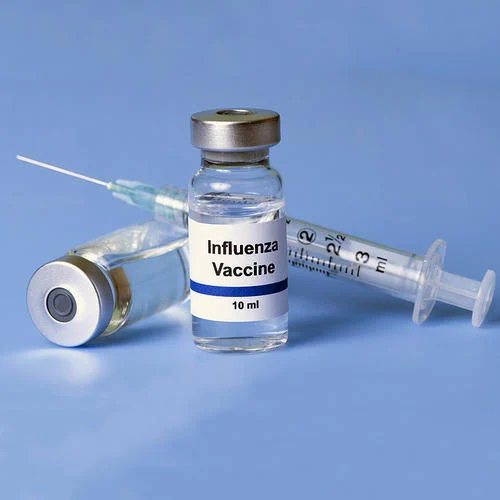
The available vaccine in India is a killed virus vaccine to be given intramuscularly. Other vaccines include nasal spray vaccines (containing live attenuated virus). As the influenza virus constantly mutates, a new batch is prepared every year. The vaccine becomes effective against influenza virus 2 weeks after administration. Since the peak influenza season begins in October and lasts till May, October-November are the best times to receive vaccination.
A single dose of inactivated flu vaccine in dose of 0.5 ml is given intramuscularly into the deltoid muscle.
For most adults and children over the age of 6 months, a standard dose of the influenza vaccine is typically administered.
For children between the ages of 6 months and 9 years who are receiving the influenza vaccine for the first time or who have not previously received two doses of the vaccine, two doses administered at least four weeks apart may be recommended to ensure adequate immune response.
Vaccination is indicated in high-risk subjects, e.g., those with COPD, CKD, cardiac or lung diseases, hepatic, metabolic diseases (diabetes), hematological diseases, pregnancy, nursing homes, health care personnel, household contacts of children <5 years or adults >50 years, diseases which impair respiratory functions, and immunosuppressed individuals.
Contra Indicated in those having Hypersensitivity to Egg or Gentamicin. Don’t give during fever or any acute infections.
Precaution to be taken in Thrombocytopenic and Coagulation disorder patients.
Vaccine can be given during Pragnancy and Lactation.
Side effects include allergic reactions, Guillain Barre syndrome (very rare).
High-risk individuals (see above) should not receive nasal spray live flu vaccine.
The vaccine provides adequate protection against HINI infection. Antibody monitoring is not required.