Morning:10:00am to 02:00pm Evening:06:00pm to 08:00pm Saturday & Sunday Evening Closed


Interstitial Lung Disease
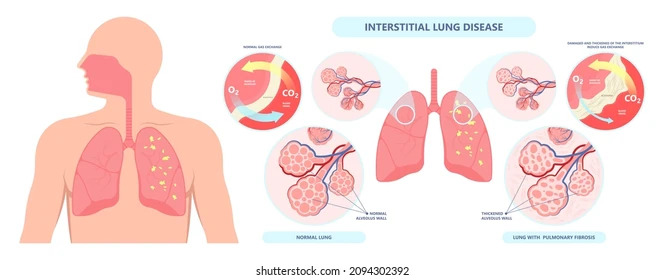
Interstitial lung disease (ILD) describes a large group of disorders characterized by progressive scarring of the lung tissue between and supporting the air sacs. The scarring associated with interstitial lung disease may cause progressive lung stiffness, eventually affecting your ability to breathe and get enough oxygen into your bloodstream.
Causes
- Environmental Exposure: Inhaling pollutants like asbestos, silica, coal dust or certain chemicals can contribute.
- Genetic Predisposition: Some cases may have a familial connection.
- Infections: Chronic lung infections can lead to inflammation and scarring.
- Autoimmune Conditions: Diseases like rheumatoid arthritis may trigger lung damage.
- Medication Side Effects: Certain medicines, including some antibiotics and chemotherapy, can be a factor.
- Radiation Therapy: Chest radiation, especially for cancer treatment, may result in pulmonary Fibrosis.
- Occupational Hazards: Jobs with exposure to harmful substances like dust or bird droppings can increase risk.
- Idiopathic: when cause is not known.
Symptoms
- Persistent, dry cough is a common symptom
- Shortness of breath at rest or with exertion.
- Fatigue and weakness
- Chest discomfort or pain.
Diagnosis
CT scan of the chest (HRCT) is crucial in determining the type of ILD.
Spirometry and diffusion capacity give an idea of the extent of fibrosis and the disability it has produced.
A six minute walk test is also a good way of assessing the patients functional status and is of prognostic value.
A bronchoscopy and trans-bronchial biopsy and, on occasion, an open lung biopsy may be needed to establish the type of ILD.
Treatment
- Medications: Medicines that suppress the immune system and decrease lung inflammation such as steroids are prescribed for certain types of ILDs
- Oxygen Therapy: Provides supplemental oxygen to improve breathing and relieve symptoms.
- Pulmonary Rehabilitation: Combines exercise, education, and support to enhance overall lung function and quality of life.
- Anti-fibrotic Drugs: Targeted medications that aim to reduce scarring in the lungs and prevent further damage.
- Lung Transplant: Considered in severe cases when other treatments are ineffective, offering a potential cure.
What People Are Saying About Interstitial Lung Disease Services And Treatments
Read What Our Patients Have To Say. Thank You For Your Trust And Support!
Sunita Gupta
I, Sunita Gupta, recently underwent treatment for interstitial lung disease (ILD) under the care of Dr. J.P. Agrawal, and I am immensely grateful for the exceptional care I received. Dr. Agrawal’s expertise in Allergy and Respiratory Medicine, coupled with his compassionate approach, made a significant difference in my treatment journey.
Vineet
Thanks to Dr. Agrawal’s expertise and personalized approach to care, I have seen significant improvements in my ILD symptoms and overall quality of life. I highly recommend Dr. J.P. Agrawal to anyone seeking expert treatment for interstitial lung disease. His professionalism, compassion, and dedication to patient care make him an invaluable resource for anyone living with this challenging condition.
